
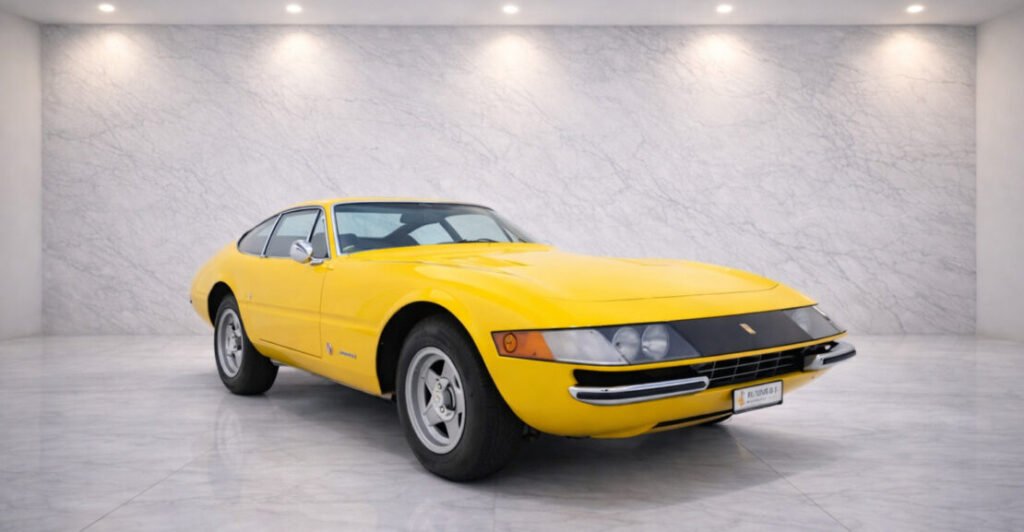
Among the great grand touring machines ever created in Maranello, the Ferrari 365 GTB/4 Daytona holds an exceptional place. Introduced at the end of the 1960s, the model represented Ferrari’s ultimate interpretation of the front-engined V12 berlinetta — a car designed to combine breathtaking performance with the elegance and composure expected from one of Italy’s most prestigious automotive brands.
With its sculpted proportions, naturally aspirated V12 engine and unmistakable Pininfarina design, the Daytona quickly became one of the defining Ferraris of its era. More than fifty years after its debut, it continues to captivate collectors worldwide, representing the final chapter of Ferrari’s traditional front-engined V12 grand tourers before the brand moved toward mid-engined supercars.
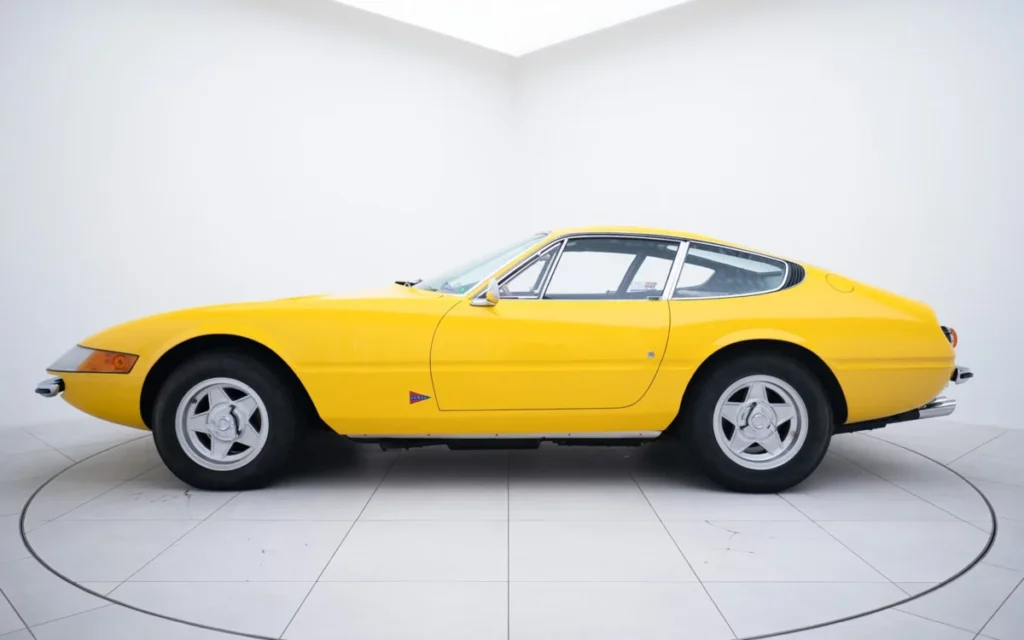
The 1970 Ferrari 365 GTB/4 Daytona “Plexiglas” presented here captures the essence of that remarkable period in Ferrari history. Finished in a striking yellow exterior paired with a green interior, this example reflects the expressive design culture of the early 1970s while maintaining the timeless elegance that defines the model. With just 6,825 kilometers recorded, the car stands as an exceptionally preserved example of one of Ferrari’s most celebrated classic berlinettas.
The Early “Plexiglas” Daytona
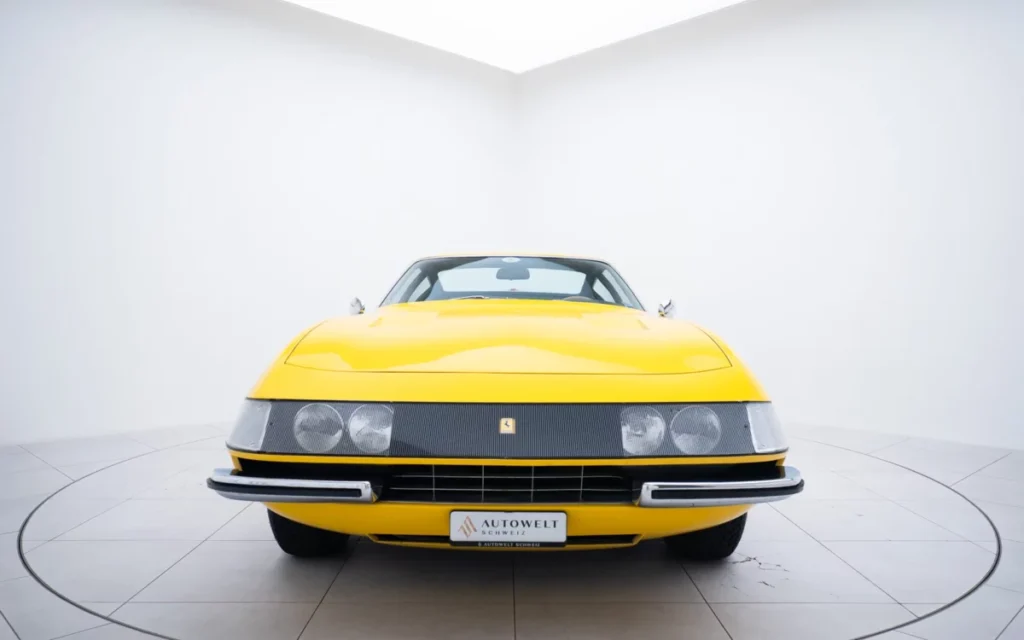
Among Ferrari collectors, the term “Plexiglas Daytona” carries particular significance. Early production versions of the 365 GTB/4 featured a distinctive transparent panel covering the car’s four front headlights, creating a clean and uninterrupted front-end design.
This elegant solution formed part of the original styling vision for the model. The clear panel integrated seamlessly into the nose, giving the car a smooth and modern appearance that set it apart from many contemporaries.
As regulations evolved during the early 1970s, Ferrari replaced this configuration with retractable pop-up headlights for later models. As a result, the original Plexiglas front end became a defining characteristic of the earliest Daytonas and remains highly prized among collectors today.
These early examples are widely regarded as the purest expression of the Daytona’s design, preserving the sleek aesthetic originally envisioned by Ferrari and Pininfarina.
Ferrari’s Ultimate Front-Engine V12 GT
When the 365 GTB/4 was introduced in 1968, Ferrari was perfecting the concept of the high-performance grand tourer. The Daytona was conceived as a car capable of extraordinary speed while still delivering the comfort and stability required for long-distance travel.
At its heart lies Ferrari’s legendary front-mounted V12 engine, a mechanical masterpiece that defined many of the brand’s most prestigious models of the period. The configuration produced the Daytona’s distinctive proportions — a long, dramatic bonnet housing the engine and a compact cabin positioned toward the rear.
During its time, the Daytona ranked among the fastest road-going cars in the world, capable of reaching speeds approaching 280 km/h. Yet its character extended far beyond raw performance. It was designed as a true grand tourer — equally suited to fast drives across Alpine passes, scenic coastal routes or extended journeys across Europe.
The model also represents an important historical milestone. The Daytona would become the last of Ferrari’s great front-engined V12 berlinettas before the company shifted its flagship supercars toward mid-engine layouts in the 1970s.
Design by Pininfarina
Few classic Ferraris possess a silhouette as instantly recognizable as the Daytona. The bodywork was developed by Pininfarina, with Leonardo Fioravanti shaping the car’s distinctive proportions.
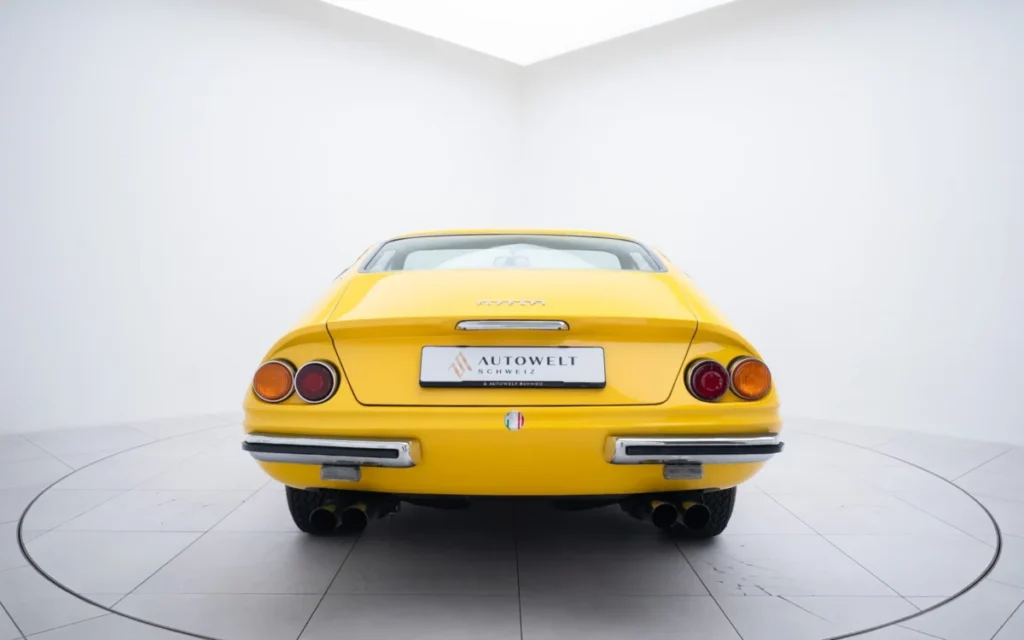
Compared with earlier Ferrari grand tourers, the Daytona introduced a more modern and angular design language. The elongated bonnet flows seamlessly into a sharply defined nose, while the roofline tapers elegantly toward the muscular rear section.
Subtle aerodynamic details enhance the car’s purposeful character. Carefully integrated air vents, slim chrome accents and a clean rear profile contribute to the Daytona’s balanced design.
The Plexiglas front fascia plays a central role in this visual harmony. By concealing the headlights beneath a transparent panel, the design achieves a smooth and uninterrupted front surface that still feels remarkably contemporary.
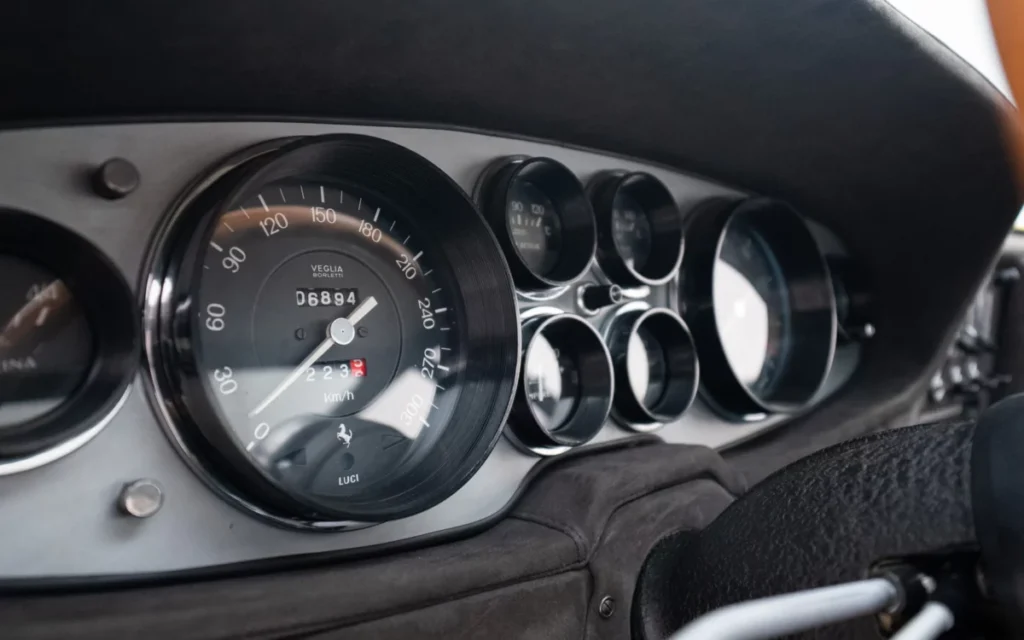
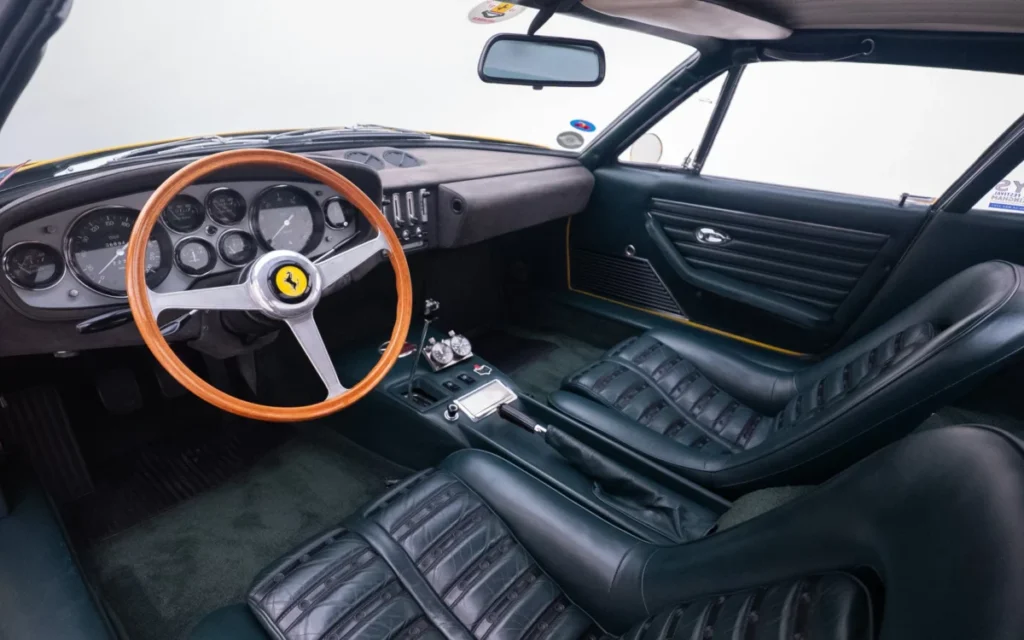
Inside the cabin, Ferrari continued the theme of driver-focused craftsmanship. The cockpit features a classic instrument cluster, clearly arranged gauges and the traditional gated manual gearbox that remains one of the most recognizable elements of classic Ferrari interiors.
The unusual yellow exterior paired with a green interior reflects the bold colour combinations chosen by many Ferrari clients during the early 1970s. Today, such specifications add an additional layer of individuality and charm to already rare collector cars.
A Ferrari for the Collector
Over the decades, the Daytona has evolved from a high-performance road car into one of the most respected collector Ferraris in the world. Its importance within Ferrari’s design history, combined with its mechanical purity and timeless aesthetics, ensures enduring interest among enthusiasts.
Early Plexiglas-nose Daytonas occupy a particularly special position within this legacy. Their rarity and historical significance make them especially desirable for collectors seeking authentic examples of Ferrari’s classic V12 era.
The car presented here — with extremely low mileage, striking colour configuration and early production features — represents a rare opportunity to acquire one of the most iconic grand touring Ferraris ever produced.
More than half a century after its creation, the Ferrari 365 GTB/4 Daytona remains a symbol of the brand’s mastery of performance, design and engineering. It stands not only as a remarkable sports car, but also as a lasting icon of Ferrari’s golden era.
Vehicle Details
Model: Ferrari 365 GTB/4 Daytona “Plexiglas”
Year: 12/1970
Mileage: 6,825 km
Specification / Configuration: Yellow exterior, green interior, early Plexiglas front design, classic V12 grand tourer configuration
Location: Switzerland