

In the world of modern supercars, few machines carry a legacy as deeply rooted in motorsport as the Ford GT. Born from one of the most celebrated chapters in racing history, the model is not merely a high-performance road car — it is a direct continuation of Ford’s endurance racing heritage, reinterpreted for the modern era.
The latest generation Ford GT was conceived with a singular purpose: to return to Le Mans and win. That ambition was realized in 2016, when the car claimed victory in the GTE class, echoing Ford’s historic triumphs of the 1960s. The road-going version that followed was never intended to be conventional. Instead, it became one of the most focused and technically advanced supercars of its generation — a machine shaped by aerodynamics, lightweight engineering and racing philosophy.
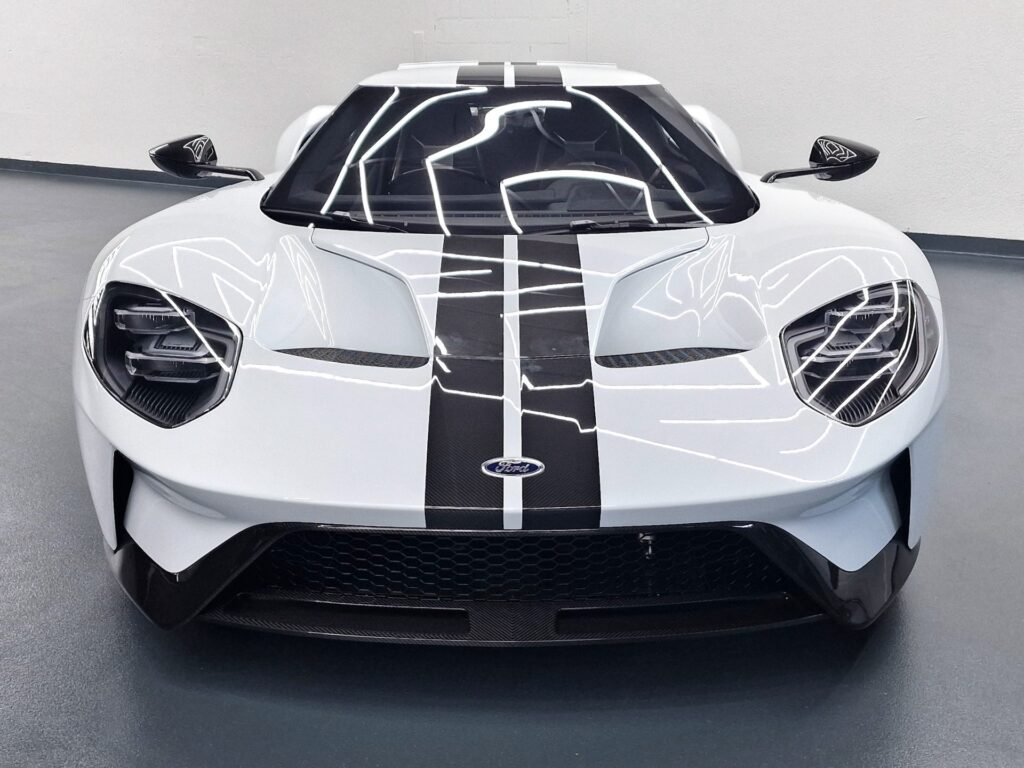
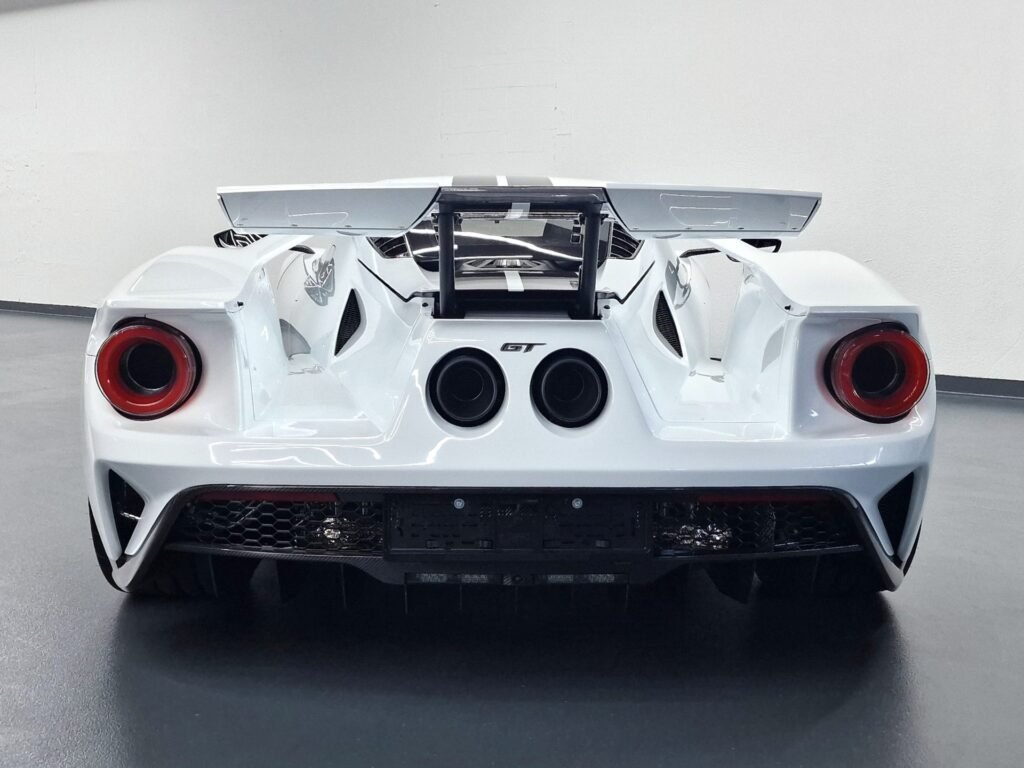
The example presented here — a 2023 Ford GT Carbon Series, delivered in Switzerland — represents one of the most exclusive interpretations of this already rare model. With just 50 kilometers, it remains in near-delivery condition, offering collectors the opportunity to acquire a virtually untouched example of one of the most significant modern supercars.
A Carbon-Focused Evolution
The Carbon Series stands as one of the most distinctive versions of the Ford GT. Developed to further reduce weight and enhance performance, this specification introduces an extensive use of carbon fiber components throughout the vehicle.
Compared to the standard model, the Carbon Series is approximately 18 kilograms lighter, achieved through carefully selected lightweight elements. These include carbon fiber wheels, titanium lug nuts, and a polycarbonate engine cover, all contributing to improved performance and a more direct driving experience.
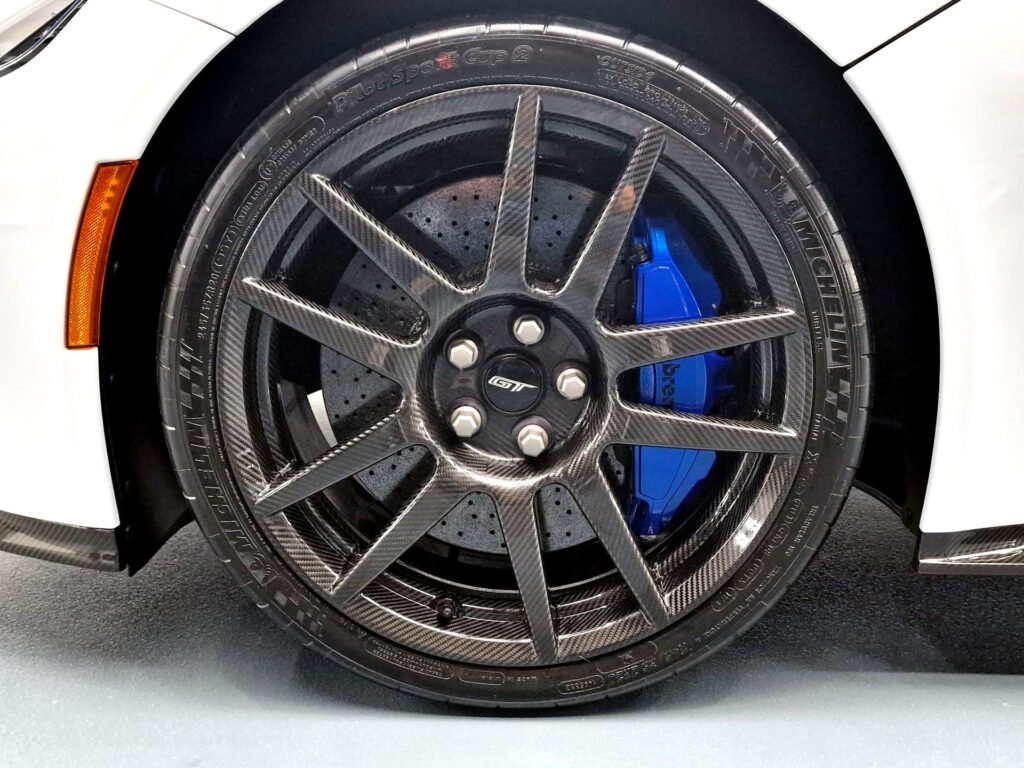
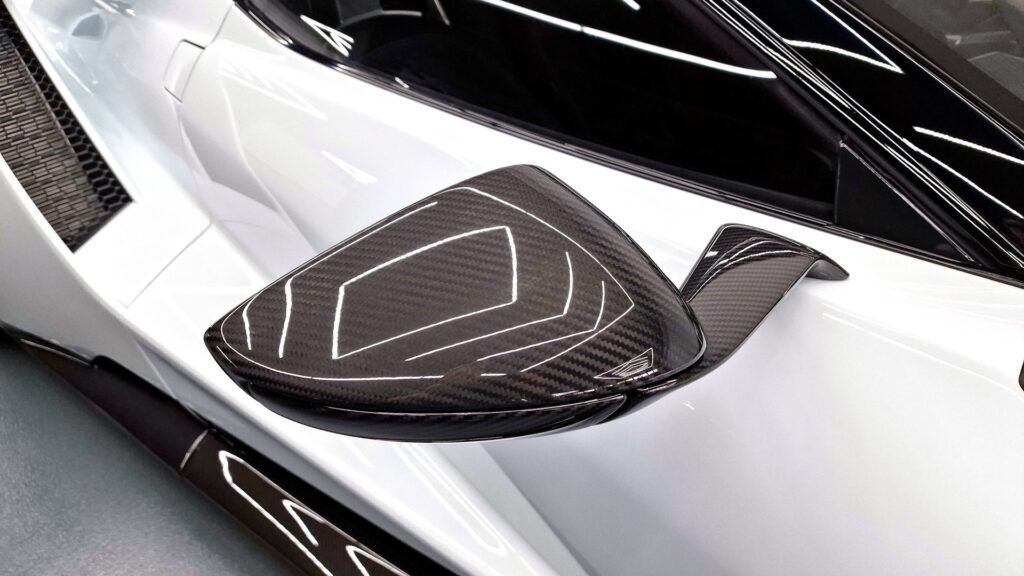
Visually, the Carbon Series is immediately recognizable. Exposed carbon fiber surfaces, subtle racing-inspired striping and a purposeful minimalist approach define the exterior. The result is a car that feels closer to a competition machine than to a traditional road-going supercar.
Unlike the more extreme Competition Series, this version retains features such as air conditioning and an audio system, ensuring that while performance remains the priority, usability is not entirely sacrificed.
Engineering Inspired by Le Mans
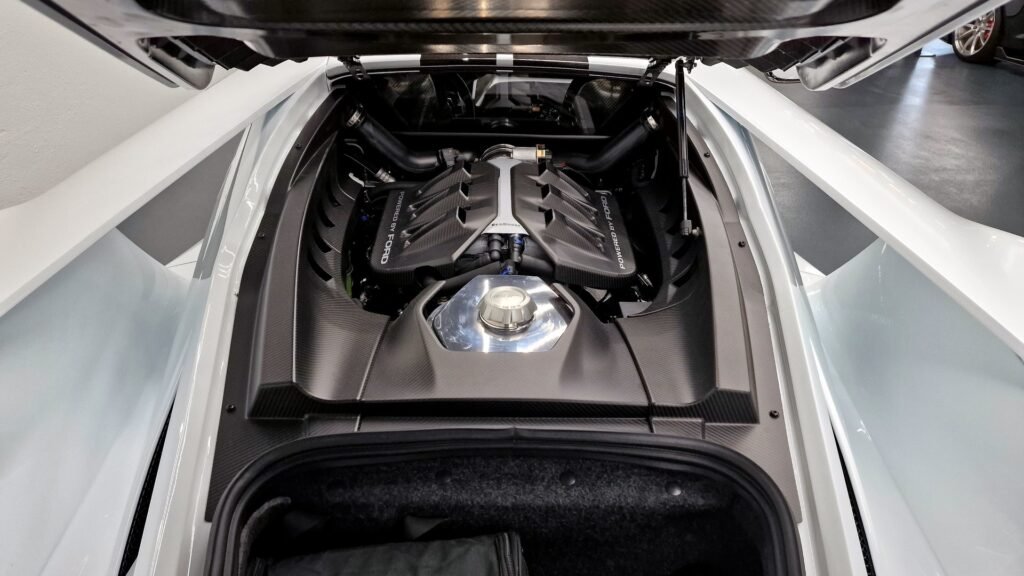
At its core, the Ford GT reflects a design philosophy rooted in endurance racing. The car’s structure is based on a lightweight carbon fiber monocoque, combined with advanced aerodynamics developed through extensive testing and competition experience.
Power comes from a 3.5-liter twin-turbocharged EcoBoost V6, producing 659 horsepower. While unconventional compared to traditional large-displacement engines, this powertrain was chosen for its efficiency, compact size and performance potential — characteristics essential for both racing and road use.
The engine is paired with a dual-clutch automatic transmission, delivering rapid gear changes and precise power delivery to the rear wheels. The result is a driving experience that combines raw speed with remarkable control.
Active aerodynamics play a central role in the GT’s performance. Adjustable rear wing elements, advanced airflow management and a low, sculpted profile allow the car to generate significant downforce while maintaining high-speed stability.
Design: Function Meets Identity


Every aspect of the Ford GT’s design is driven by function. Unlike many supercars that prioritize visual drama alone, the GT’s shape is defined by aerodynamic efficiency and performance requirements.
The most striking feature is the car’s flying buttress design, which channels air through the body toward the rear wing. This solution not only enhances downforce but also creates one of the most distinctive silhouettes in modern automotive design.
The Carbon Series specification further amplifies this visual identity. Carbon fiber elements are prominently displayed, highlighting the car’s lightweight construction and racing origins.
Despite its technical focus, the Ford GT retains a strong visual presence. Its low stance, wide track and sculpted surfaces create a design that feels both futuristic and purposeful.
A Driver-Centric Cockpit
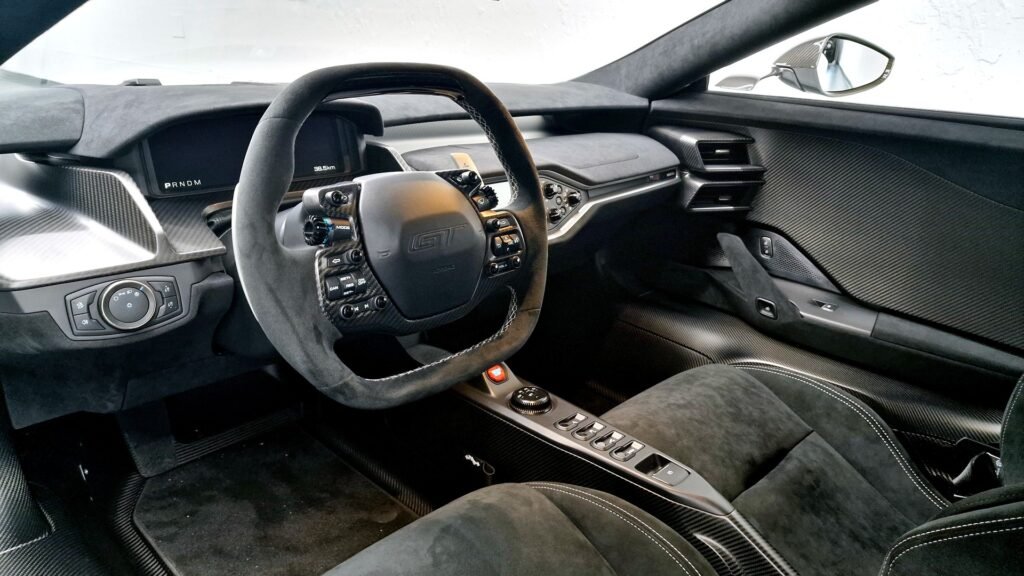
Inside, the Ford GT continues its focus on performance. The cabin is designed around the driver, with a minimalist layout that emphasizes clarity and control.
Fixed seating positions and an adjustable steering column reflect the car’s racing origins, while digital displays provide essential information without unnecessary distraction.
The Carbon Series maintains a refined yet purposeful atmosphere. Lightweight materials, exposed carbon fiber and subtle detailing create an interior that feels both technical and exclusive.
While the car remains uncompromising in its focus, the inclusion of comfort features such as climate control and an audio system ensures it can still be enjoyed beyond the track.
A Modern Collectible with Racing DNA
In today’s automotive landscape, where electrification and hybridization are rapidly redefining performance, the Ford GT stands apart. It represents one of the last generations of supercars developed with a clear connection to motorsport and a focus on lightweight engineering.
The Carbon Series, in particular, occupies a unique position within the model range. Its reduced weight, distinctive design and limited production ensure strong appeal among collectors.

This Swiss-delivered example, with delivery mileage and complete history, represents a rare opportunity to acquire a car that combines Le Mans-winning heritage, cutting-edge engineering and long-term collectibility.
For enthusiasts seeking a modern supercar that offers both performance and historical significance, the Ford GT Carbon Series remains one of the most compelling choices available.
Vehicle Details
Model: Ford GT Carbon Series
Year: 01/2023
Mileage: 50 km
Specification / Configuration: Carbon Series lightweight specification, carbon fiber wheels, titanium hardware, polycarbonate engine cover, climate control, audio system
Location: Switzerland (Caldara Cars, Freienbach)